PORTUGAL
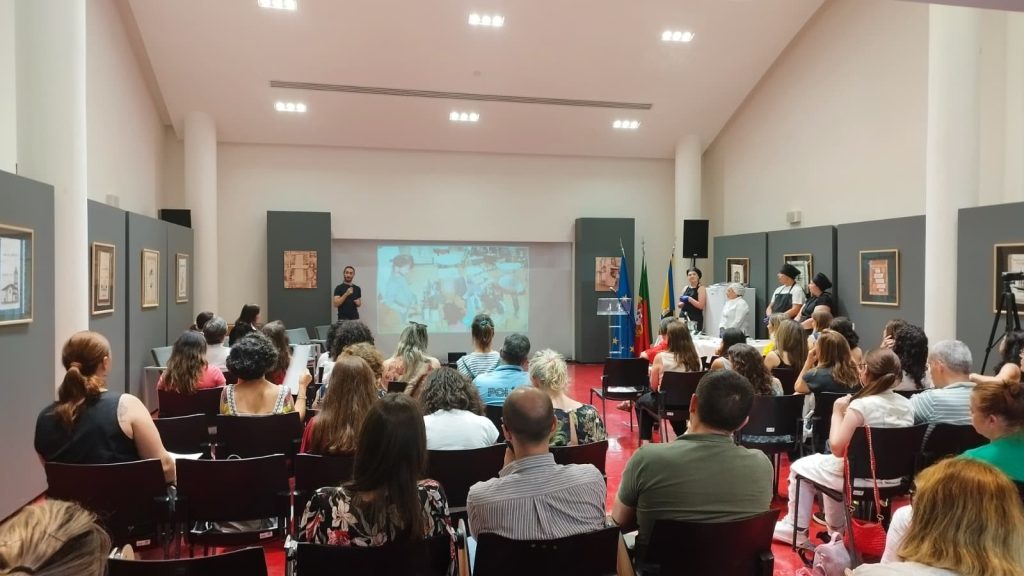
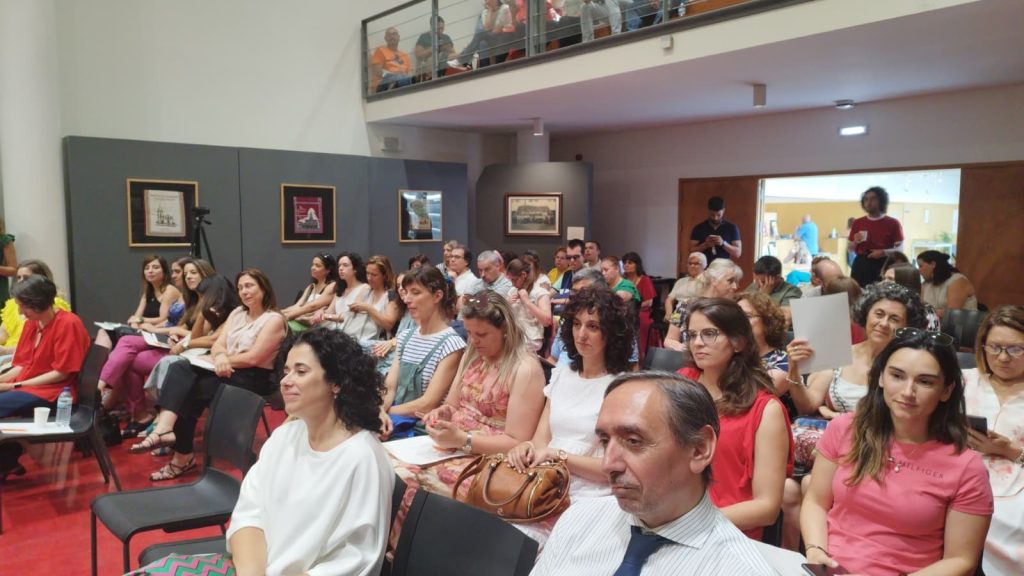
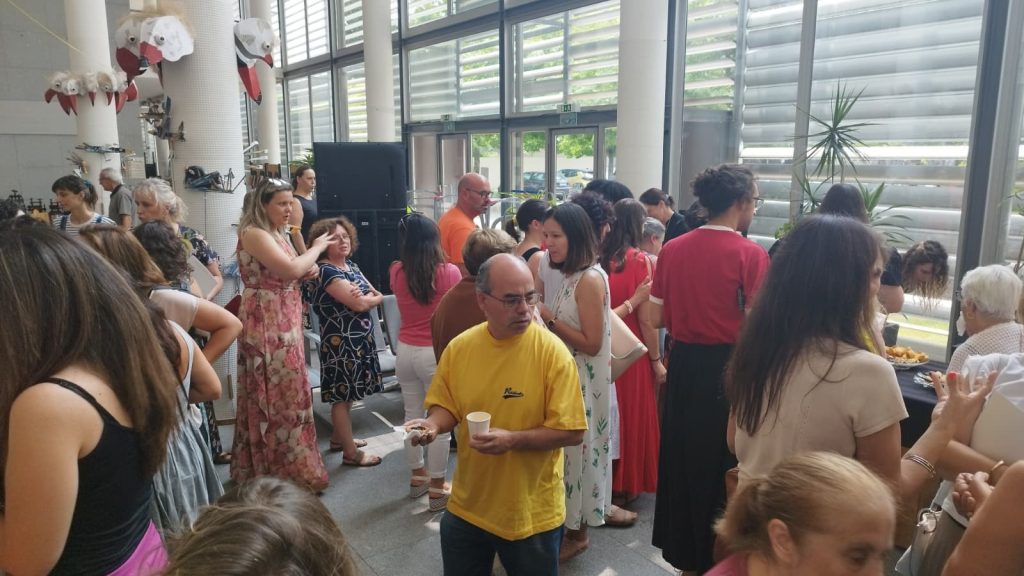
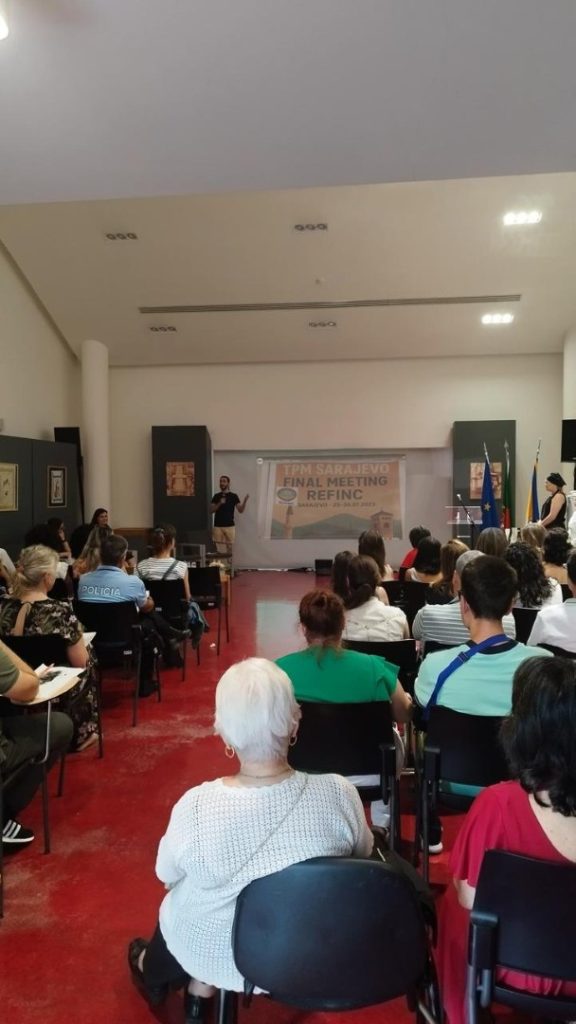
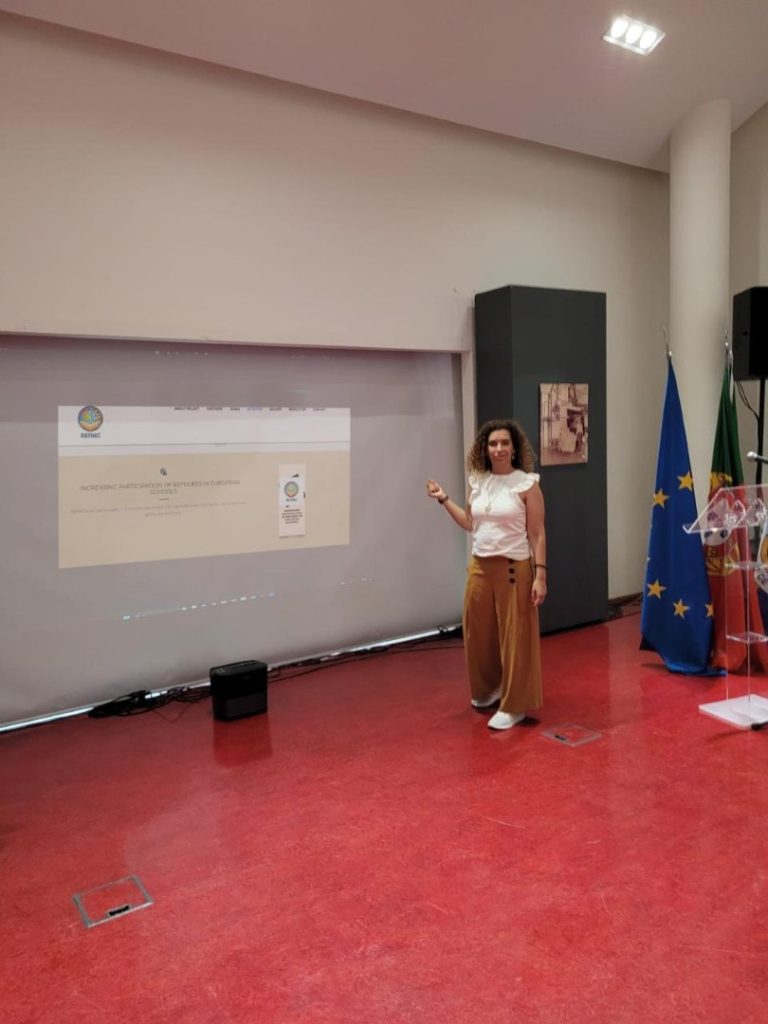
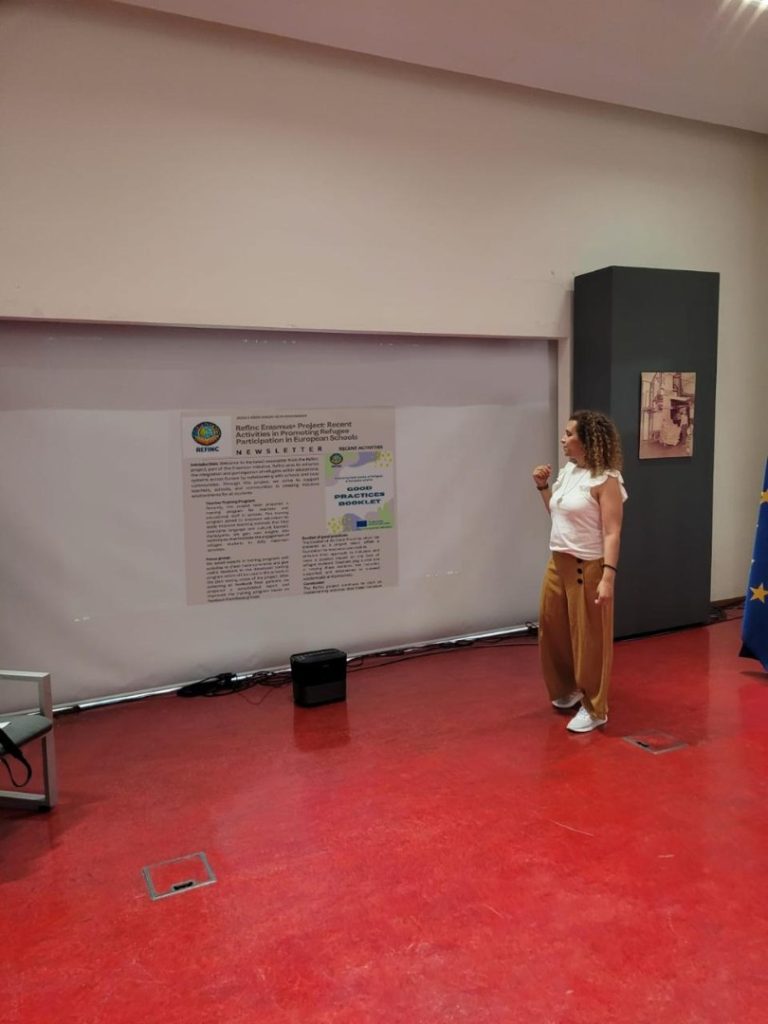
- Data of the Event
Date: 20th August 2025
Place: Biblioteca Municipal de Gondomar, Portugal
Time: 9h30 – 12h30
Hosted by: JumpIN HUB – Associação para a Inovação e Empreendedorismo, within the Erasmus+ Project REFINC – Increasing Participation of Refugees in Schools
- Introduction
The Multiplier Event in Gondomar marked the culmination of the Erasmus+ Project REFINC – Increasing Participation of Refugees in Schools, a European initiative aimed at strengthening inclusion practices in education. The project, implemented by a consortium of partners across Europe, aimed to support teachers and schools in developing effective strategies to welcome and integrate refugee and migrant students into formal and non-formal education settings. Over its lifetime, REFINC produced a range of concrete tools, including a Manual of Good Practices, a Competence and Skills Matrix for teachers, a comprehensive Educational Programme, a Training Toolkit, and an open e-learning platform.
The final event in Gondomar was organised to present these results to the broader public, ensure their sustainability, and encourage their adoption in schools and local communities. With refugee and migrant integration being a growing challenge in Portugal, particularly in municipalities like Gondomar that are increasingly multicultural, the event provided a timely and relevant opportunity to raise awareness and share practical tools with those most directly involved in education.
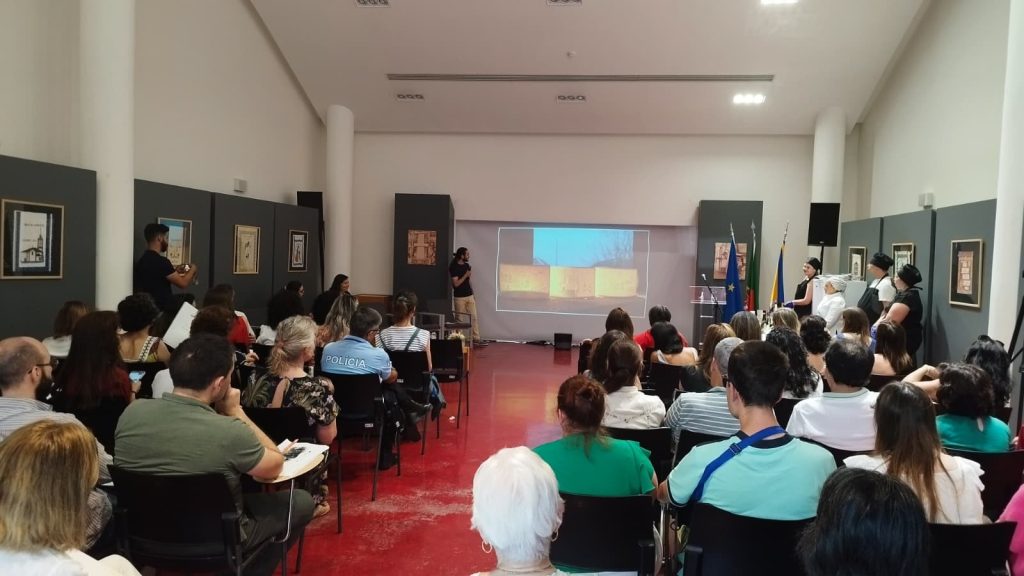
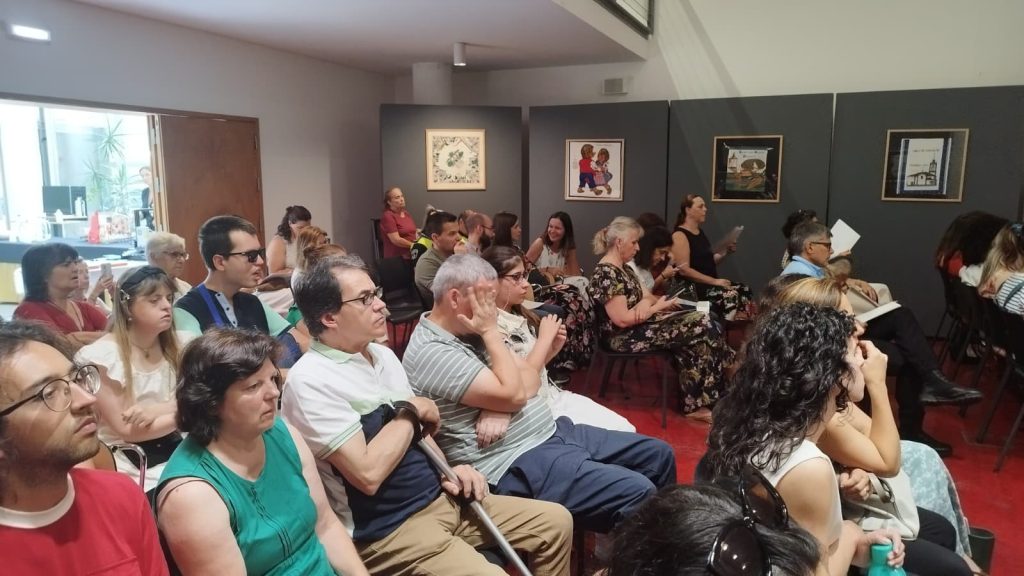
The Multiplier Event was open to the entire local community, reflecting the project’s inclusive ethos. Invitations were distributed through official channels to schools, teachers’ networks, municipal authorities, parents’ associations, and NGOs, but also widely shared online to ensure that anyone interested in the topic could attend. The result was a diverse and representative audience of 52 participants, including:
- Teachers from primary and secondary schools, who are on the frontlines of classroom inclusion;
- Parents and family representatives, who play a vital role in supporting integration beyond the school environment;
- School leaders and directors, whose policies and leadership directly shape school culture;
- Representatives of the Municipality of Gondomar, whose role in local education and social inclusion strategies is essential;
- NGOs and other stakeholders, engaged in community development, social inclusion, and migrant support.
Of the 52 attendees, 47 completed the evaluation survey distributed at the end of the event. Their feedback provided important insights into the perceived relevance, usefulness, and quality of the event, confirming that the project’s results were not only well received but also considered applicable to daily educational practice.
- Agenda of the Conference:
The agenda was carefully designed to engage a broad and diverse audience, combining formal presentations, practical demonstrations, and interactive sessions. The organisers ensured a balance between disseminating the project’s results and creating space for reflection, dialogue, and networking, so that teachers, parents, school representatives, and policymakers could all find value in the programme. Each element of the agenda was tailored to encourage active participation and to showcase how the REFINC outcomes can be applied in real educational settings.
The final agenda unfolded as follows:
- 09h30 – Reception: Registration and welcoming of participants.
- 10h00 – Opening Session: Welcome remarks by JumpIN HUB and Municipality representatives, contextualising the event within Erasmus+ and the REFINC project.
- 10h15 – Project Presentation: Presentation of REFINC’s objectives, activities, and results. This included the Manual of Good Practices, Competence & Skills Matrix, Educational Programme, Training Toolkit, and the e-Learning Platform.
- 10h45 – OER Demonstration: Introduction of the REFINC online tools and Open Educational Resources (OER), highlighting their usability for teachers.
- 11h00 – Workshop 1: Interactive session: The importance of inclusion of refugee and migrant students. Participants shared experiences and reflected on classroom strategies.
- 11h30 – Guest Speaker: Talk on integrating inclusive practices into schools and training centres. The intervention provided real-world applications and examples of good practice.
- 11h50 – Q&A and Networking: Open floor for participant questions, followed by networking opportunities that encouraged peer exchange and reflection.
- 12h30 – Closing: Summary of discussions and official closure of the event.
- Analysis of the Evaluation Surveys
To measure the event’s effectiveness and ensure that the objectives of dissemination and community engagement were achieved, participants were invited to complete an evaluation survey at the end of the event. These surveys are a vital tool for assessing both satisfaction and engagement, providing organisers with concrete evidence of the programme’s quality, the relevance of its content, and its overall impact on participants. By examining various criteria, including organisation, speakers, content, interactivity, and practical usefulness, the surveys enable us to understand not only what worked well but also where improvements can be made for future initiatives.
Out of 52 attendees, 47 responded to the evaluation survey. Results show high levels of satisfaction:
- Invitation and Registration:
- 32 Very satisfied | 15 Satisfied (Invitation)
- 31 Very satisfied | 16 Satisfied (Registration)
- Venue and Content:
- 32 Very satisfied | 15 Satisfied (Venue)
- 33 Very satisfied | 14 Satisfied (Content/subjects)
- Speakers:
- 35 Very satisfied | 12 Satisfied
- Time and Networking:
- 27 Very satisfied | 20 Satisfied (Time for discussions)
- 28 Very satisfied | 19 Satisfied (Networking opportunities)
- Food & Beverages:
- 31 Very satisfied | 15 Satisfied | 1 Not applicable
- Overall Satisfaction:
- 29 Very satisfied | 16 Satisfied | 2 Neutral
- Usefulness of Results:
- 35 answered Yes to applying project results, 12 Not applicable.
- Likelihood to Recommend:
- 28 gave a score of 5/5
- 15 gave 4/5
- 4 gave 3/5
Qualitative feedback included:
- “Very interesting event! Thank you for the invitation.”
- “We need more activities promoting inclusion of refugee, migrant, and diverse students.”
- “As a teacher, I find the project results very useful and will use them next school year.”
- “Even in schools without refugee students, the methods are adaptable for all learners.”
- “Excellent event, but more time for discussion and networking would be welcome.”
- Conclusions and Impact
The Multiplier Event in Gondomar confirmed the strong relevance of the REFINC project’s work for schools, teachers, and the wider community. The evaluation results demonstrated very high satisfaction across all criteria, validating the project’s approach and the quality of its outputs. In particular, the overwhelmingly positive feedback on the content, speakers, and applicability of the results demonstrates that the resources developed under REFINC directly address the needs of educators and stakeholders.
From an organiser’s perspective, the event produced three clear conclusions:
- Validation of REFINC’s Results: The high scores across categories such as conference content, speakers, and overall satisfaction confirm that the project’s tools — including the Manual, Training Toolkit, and e-Learning Platform — are considered relevant, practical, and useful by the target audience. This demonstrates that the project outcomes are not only theoretically sound but also ready for real-world application in schools and communities.
- Community Engagement and Ownership: The diversity of participants (teachers, parents, school leaders, NGOs, and municipal representatives) and their active involvement throughout the sessions show that refugee inclusion is recognised as a shared responsibility. The strong interest in applying the project’s outputs indicates that stakeholders feel ownership over the results, which is critical for ensuring sustainability.
- Sustainability and Policy Impact: The willingness of teachers to use the REFINC toolkit in the upcoming school year, coupled with the Municipality of Gondomar’s expressed interest in integrating the practices into its educational strategy, illustrates the project’s potential for long-term impact. Survey results further strengthen this potential by providing measurable evidence of success, which can be leveraged in discussions with policymakers and educational authorities.
In conclusion, the Gondomar Multiplier Event disseminated REFINC’s achievements and also confirmed their acceptance, relevance, and sustainability. By validating the project’s outputs through participant feedback, the event has ensured that the REFINC legacy will extend beyond the Erasmus+ funding period, continuing to inspire inclusive practices in schools and communities in Portugal and beyond.